Colectiv
Research Seminar
A regular doctoral seminar featuring guests from the academic and cultural communities. Topics range from cultural funding and Erasmus+ opportunities to contemporary artistic practices.
The seminars are held in a hybrid format and are open to all CESI students and researchers.
April 2, 2025
The Exhibition as an Artistic Medium
Doctoral seminar featuring guest speaker Horea Avram, exploring the exhibition as an artistic space and practice.
March 26, 2025
Revitalizing Dance Archives
Producing and performing the history of dance by reviving choreographic archives.
March 19, 2025
Erasmus+ Opportunities
Lorem ipsum dolor sit amet, consectetur adipiscing elit.
March 12, 2025
Funding through Creative Europe
Lorem ipsum dolor sit amet, consectetur adipiscing elit.
March 5, 2025
The Landscape of Cultural Funding
Lorem ipsum dolor sit amet, consectetur adipiscing elit.
CESI 2025 Roadmap
%2520AFIS%2520Contur%252C%2520ONLINE%252029%2520aprilie%25202026.png&w=3840&q=75)
April 29, 2026
Discourse and Debate in Scientific Research: The Dissertation in Cultural Studies
Organizers: Second-year CESI master’s students and Lecturer Dr. Corina Popa Actress Sofia Crudu has put together some useful tips for managing emotions and controlling your voice during public presentations. The meeting is intended to support master’s students who are preparing to defend their theses in Cultural Studies. Their papers are almost finished, and their presentations are in the works, so some public speaking practice would be helpful.
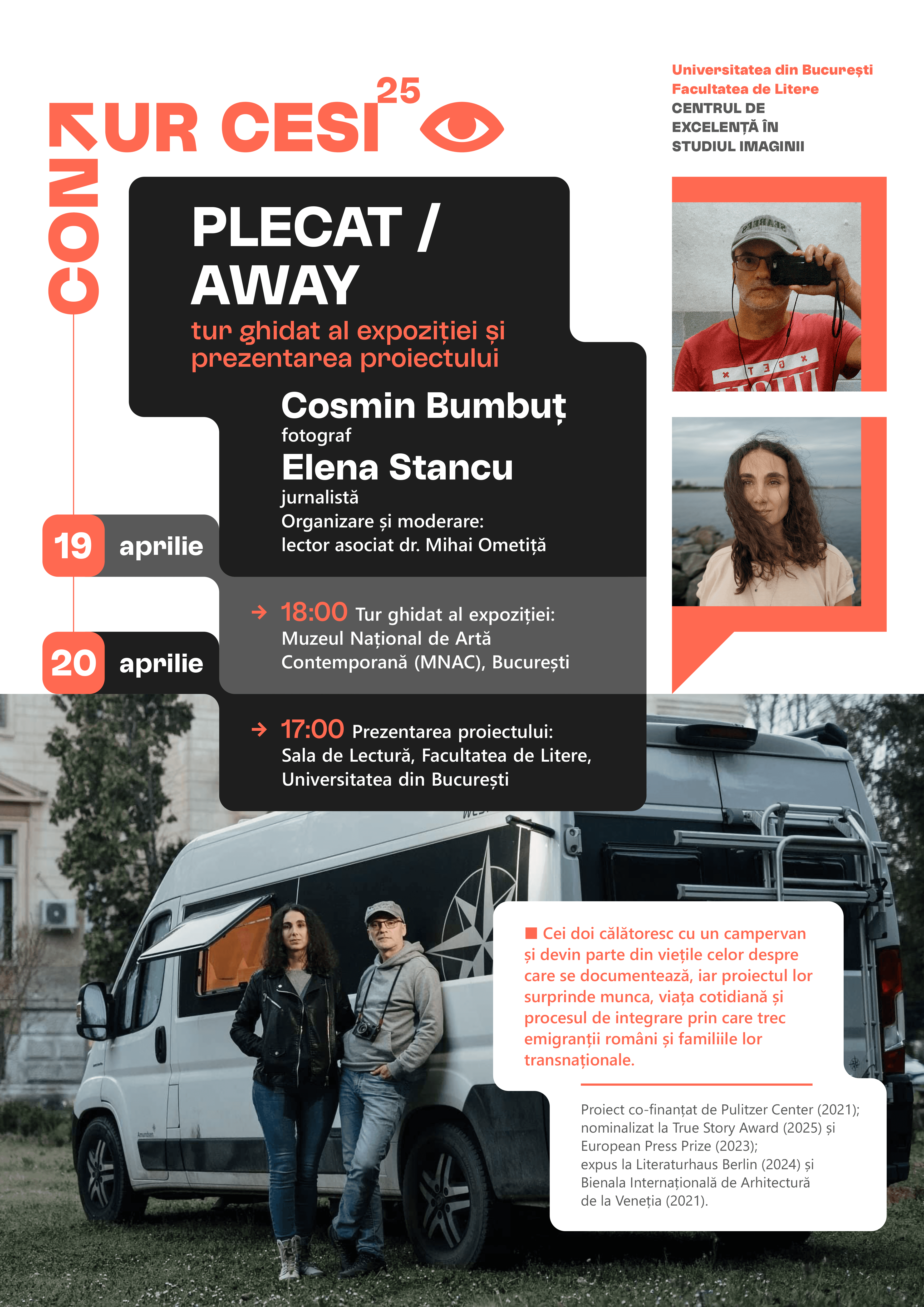
19April 20, 2026
Away – Cosmin Bumbuț (photographer) and Elena Stancu (journalist)
Guided tour of the exhibition: April 19, 6:00 p.m., National Museum of Contemporary Art (MNAC) Project Presentation: April 20, 5:00 p.m., Reading Room, right wing, 1st floor, Faculty of Letters, University of Bucharest. Moderation and organization: Associate Professor Dr. Mihai Ometiță. Photographer Cosmin Bumbuț and journalist Elena Stancu have been documenting Romanian migrant communities across Europe for six and a half years. So far, they have traveled to 12 countries and published over 130 reports on seasonal workers in Germany, doctors and nurses in England, tourism workers in Portugal, farmers in Norway, ship electricians in Denmark, researchers in Sweden, students in the Netherlands, women working as cleaners in Spain, and those caring for the elderly in Italy. The two travel in a campervan and become part of the lives of the people they are documenting, and their project captures the work, daily life, and integration process experienced by Romanian migrants and their transnational families. Their project was nominated for the True Story Award in 2025 and the European Press Prize in 2023; it received a fellowship from the Pulitzer Center in 2021 and several Romanian awards for photography and journalism. In 2024, it was exhibited at the Museum of the Romanian Peasant in Bucharest and at Literaturhaus Berlin, and in 2021 at the Venice Architecture Biennale, in the Romanian pavilion. Cosmin Bumbuț spent 15 years photographing for Romania’s leading brands. At the age of 40, he began working in documentary photography. In 2012, he published, together with Elena Stancu, the photo book Cuba continues (Art Publishing House), about the lives of Cubans during a time of transition. In 2013, he published Bumbata (Punctum Publishing), a photo book about the lives of inmates at Aiud Penitentiary before and after Romania’s accession to the EU. In 2015, he won first prize in the Architecture category of the Sony World Photography Awards with the project Private Room, for which he visited every prison in Romania. His photographs have been exhibited at the Berlin European Month of Photography (2016) and at the Brussels Summer of Photography, BOZAR (2012). In November 2013, journalist Elena Stancu—then deputy editor-in-chief of Marie Claire magazine—and photographer Cosmin Bumbuț moved into a campervan so they could work on documentary projects. They have published reports on extreme poverty, domestic violence, marginalized Roma communities, life in prisons, the medication crisis, school dropouts, and migration. They have produced two documentary films: The Last Boiler (2016), about a Roma family from southern Romania who emigrate to France, and Residents (2018), about Romania’s first center for female inmates with mental illnesses. In 2017, they published a collection of reports Home, on the road (Humanitas). In January 2019, they began work on “Plecat,” the most extensive documentary project on the migration of Romanians to Europe. The project offers an insider’s view of the lives of Romanians in the diaspora: the processes of integration into new societies, the fragile balance between homesickness and the need to belong, the lives of transnational families, and how migration transforms identity, values, and the relationship with Romania. It is an in-depth journalistic endeavor that sheds light on the emotional and social reality of a generation that is simultaneously changing both Romania and Europe.
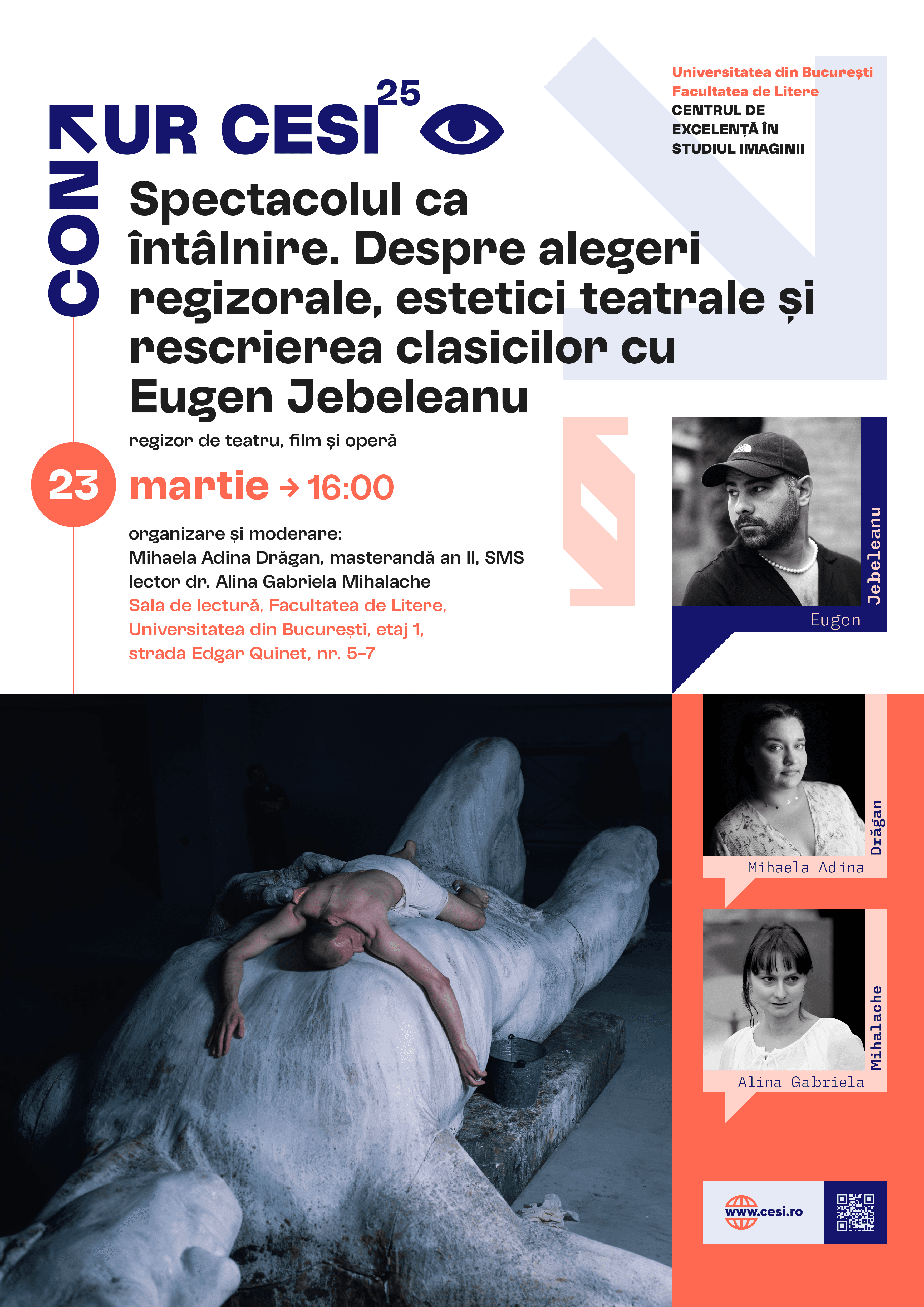
March 23, 2026
The Play as an Encounter: A Conversation with Director Eugen Jebeleanu on Directorial Choices, Theatrical Aesthetics, and Adapting the Classics
Eugen Jebeleanu made his acting debut in several plays written by Radu Afrim; in Paris, together with writer and director Yan Verburgh, he founded “Compania 28,” creating Franco-Romanian productions that have gained international recognition. He performs both on independent stages in experimental venues and on the official stages of the national theaters in Bucharest, Sibiu, and Timișoara. In 2020, he won the UNITER Award in the “Best Director” category for the international co-production Itinerarii. One Day the World Will Change (ARCUB and Compagnie des Ogres from France). The meeting will be moderated by Mihaela Adina Drăgan (second-year master’s student in theSociety, multimedia, entertainment) and Alina Gabriela Mihalache (Assistant Professor, Ph.D.).
%2520AFIS%2520Contur%252C%2520ONLINE%252016%2520decembrie%25202025.png&w=3840&q=75)
December 16, 2025
Kenopsia / Metanoia – Seminar and Studio Visit
Speakers: Ștefan Ungureanu, visual artist; George Anghelescu, visual artist During the seminar and studio visit, visual artists Ștefan Ungureanu and George Anghelescu will present the exhibition Kenopsia / Metanoia, curated by art critic Dan Popescu and on view from December 13, 2025, to February 28, 2026, at InVitro Gallery in Cluj-Napoca. “Ștefan Ungureanu and George Anghelescu are millennials. What specifically distinguishes Gen Y artists from their predecessors? In my view, it has to do with how—since most of them are urban dwellers—they relate to the future and the past. For Gen Y, the past does not carry the dramatic weight of tradition, and the future is viewed with a mixture of optimism and melancholy. The current exhibition presents two examples of affective-axiological visual positioning in relation to the future and the past. Kenopsia is the eerie, desolate atmosphere of a place that is usually bustling with people and life but is now empty and quiet. It is one of those feelings for which one would not even suspect that there is a term to describe it. Ștefan Ungureanu creates an image that captures this feeling and makes it even more ineffable, in mental landscapes that clearly suggest a fictional future. Despite resembling a landscape reminiscent of an Arizona desert, it bears the traces of human terraforming and of a life that is still smoldering, or that can still be glimpsed. It is the image of the melancholy of the future. George Anghelescu highlights how millennials relate to the past. Reiterating a point he has made before, for Generation Y, the past is either something to be ignored or left behind by coming to terms with its countless injustices. Visual metanoia is George’s obsession. No nation remains untainted by its history, and in each of his images, Anghelescu creates a tension between horror and beauty that speaks more powerfully than many historical treatises. (Text: Dan Popescu / Translation: Bertha Savu)
%2520AFIS%2520Contur%252C%2520ONLINE%252012%2520decembrie%25202025.png&w=3840&q=75)
December 12, 2025
The Garden of Synthetic Delights – on immersive multimedia exhibitions
Guest: Cristina Bodnărescu, artist new media, co-founder The Ethics of Joy, a master’s student in the CESI program “Society, Multimedia, and Performing Arts” Organized and moderated by: Assistant Professor Ana Negoiță, Ph.D., and Professor Laura Mesina, Ph.D. The Project The Garden of Synthetic Delights proposes a posthumanist interpretation of the relationship between humans and technology, approached through transdisciplinary practices and emerging technologies. In practice, a multidisciplinary team combines visual arts, design, music, programming, 3D modeling and printing, electronics, AI, VR, and scenography to create an immersive artistic experience in virtual reality, open access to a new audience, and integrate digital art into education. During the event, Cristina Bodnărescu will offer a behind-the-scenes look at the project and present the curatorial concept, explaining how the works explore the relationships between the human, the non-human, and the technological, the new forms of sensibility generated by the interactivity between humans, art, and technology, and how the artists involved in the exhibition integrate the body, perception, and affective ecology into a post-natural framework. The exhibition, which features nine art installations, including five newly created immersive installations, was curated by Ioana Iuna Șerban (Museum of Recent Art, Bucharest), who holds a CESI PhD in Humanities and Arts/Philology. Project co-funded by AFCN. Institutional partnership with the Center of Excellence in Image Studies (CESI).
Show all (6)
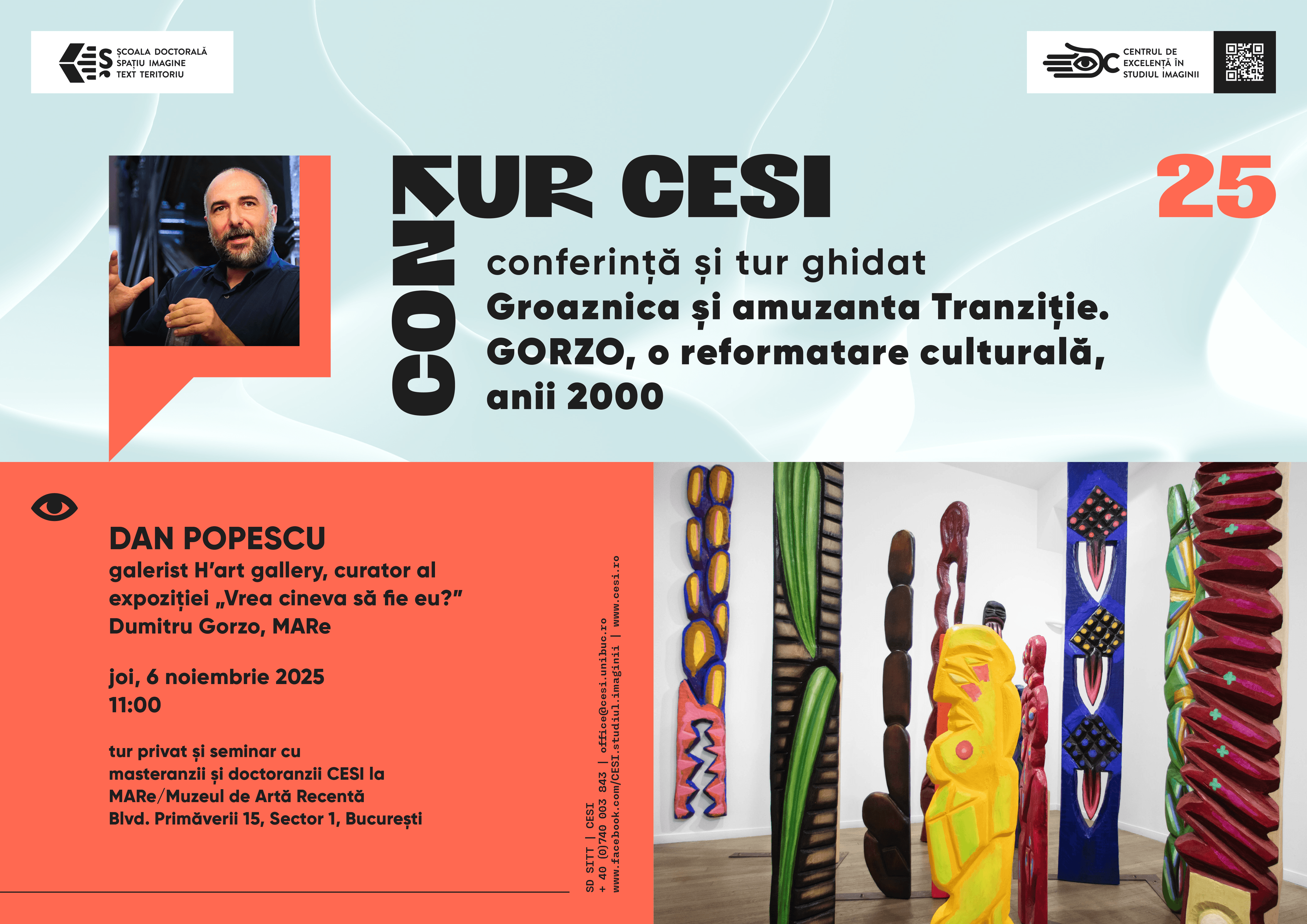
November 6, 2025
CONFERENCE, PRIVATE EXHIBITION TOUR, AND SEMINAR - The Terrifying and Amusing Transition: Gorzo, a Cultural Reformation, the 2000s
Speaker: Dan Popescu, art historian, owner of H'Art Gallery, curator of the exhibition Dumitru Gorzo – “Does Anyone Want to Be Me?”, MARe, September 18, 2025 – January 18, 2026 Organizer: George Anghelescu, visual artist, CESI specialist The event kicks off the CONTUR CESI 25 program, which marks a quarter-century of activity at the Center of Excellence in the Study of the Image. Guest lecturer Dan Popescu taught courses on modern and contemporary art during the early years of CESI’s master’s program “Theory and Practice of the Image,” beginning in 2001. With extensive experience as a gallerist and currently a member of the board of directors of the Museum of Recent Art, Dan Popescu offers today’s CESI students a lecture, a seminar, and a guided tour—in his capacity as curator—through the exhibition-event curated by Dumitru Gorzo.
CESI Digital Fellows
The CESI Student Research Society. Digital Fellows organizes workshops, debates, and academic events led by master’s and doctoral students.
The program encourages student initiatives in research and digital cultural practices.
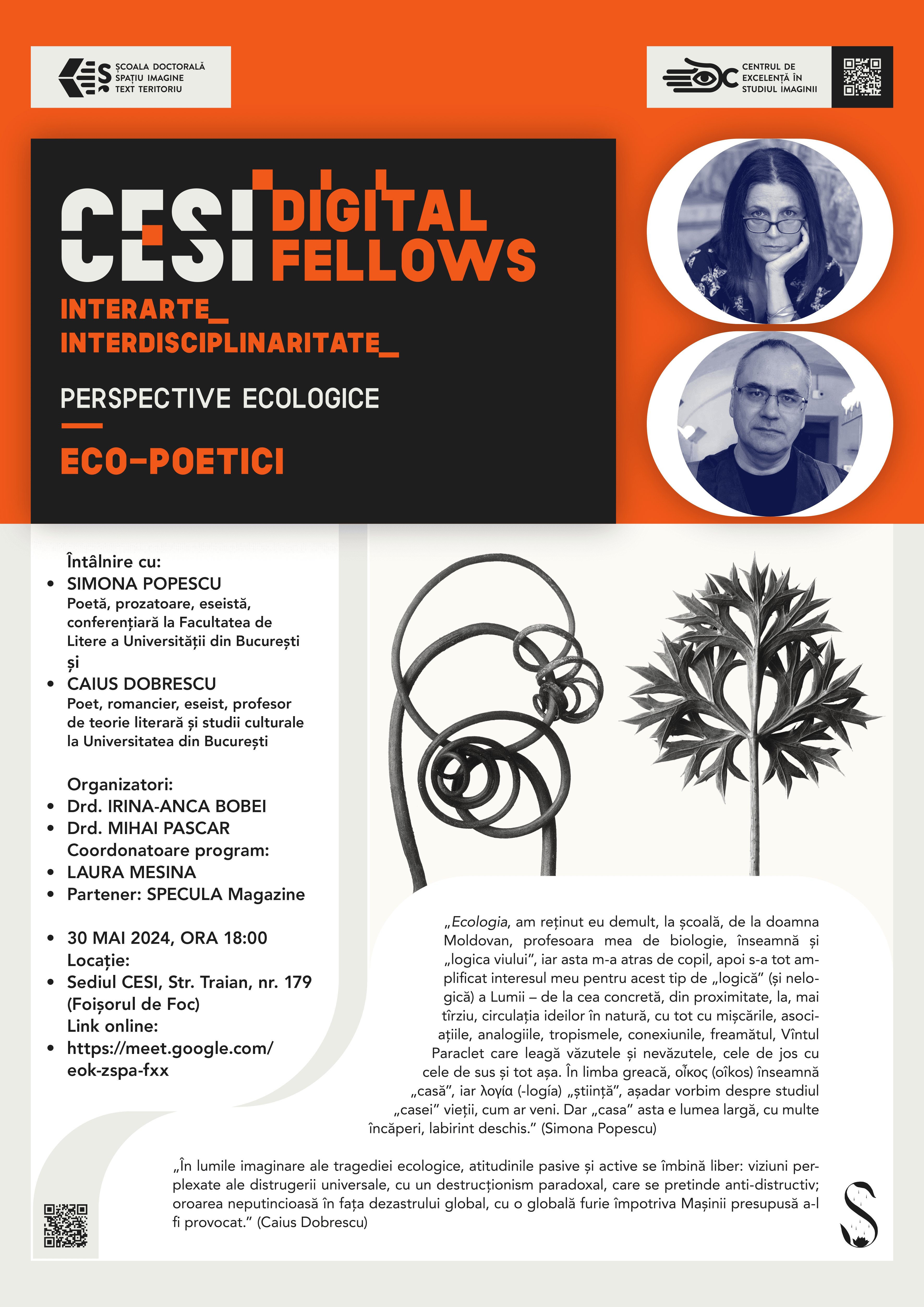
May 30, 2024
Topic under discussion: Ecological Perspectives - Eco-poetics
Guests: Associate Professor Simona Popescu, Ph.D., and Professor Caius Dobrescu, Ph.D. “In the imaginary worlds of ecological tragedy, passive and active attitudes blend freely: bewildered visions of universal destruction, coupled with a paradoxical destructivism that claims to be anti-destructive; helpless horror in the face of global disaster, with a global fury against the Machine presumed to have caused it.” (Caius Dobrescu) “Ecology, as I learned long ago in school from Mrs. Moldovan, my biology teacher, also means “the logic of life,” and this captivated me as a child; later, my interest in this kind of “logic” (and illogic) of the World continued to grow—from the concrete, immediate world to, later on, the circulation of ideas in nature, along with the movements, associations, analogies, tropisms, connections, the rustling, the Paraclete Wind that links the seen and the unseen, the lower with the upper, and so on. In Greek, οἶκος (oíkos) means “house,” and λογία (-logía) means “science,” so we are talking about the study of the “house” of life, so to speak. But this “house” is the wide world, with many rooms, an open labyrinth.” (Simona Popescu)
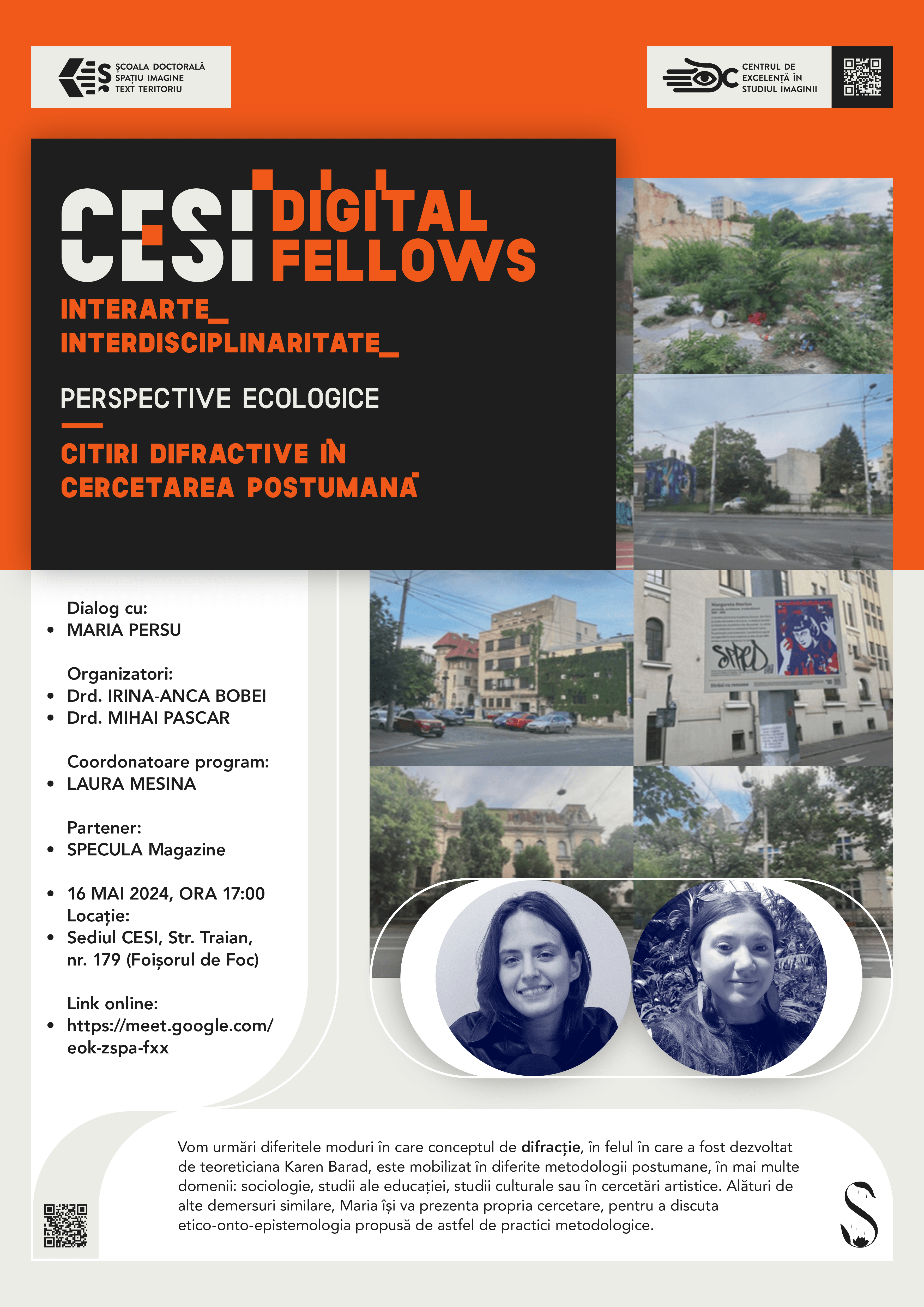
May 16, 2024
Ecological Perspectives - Diffractive Readings in Posthuman Research
The meeting will explore the various ways in which the concept ofdiffraction, as developed by Karen Barad, is employed in various posthuman methodologies across several fields: sociology, education studies, cultural studies, and artistic research. Maria Perșu will present her own research alongside other similar approaches to discuss the ethical-ontological-epistemological framework proposed by such methodological practices.
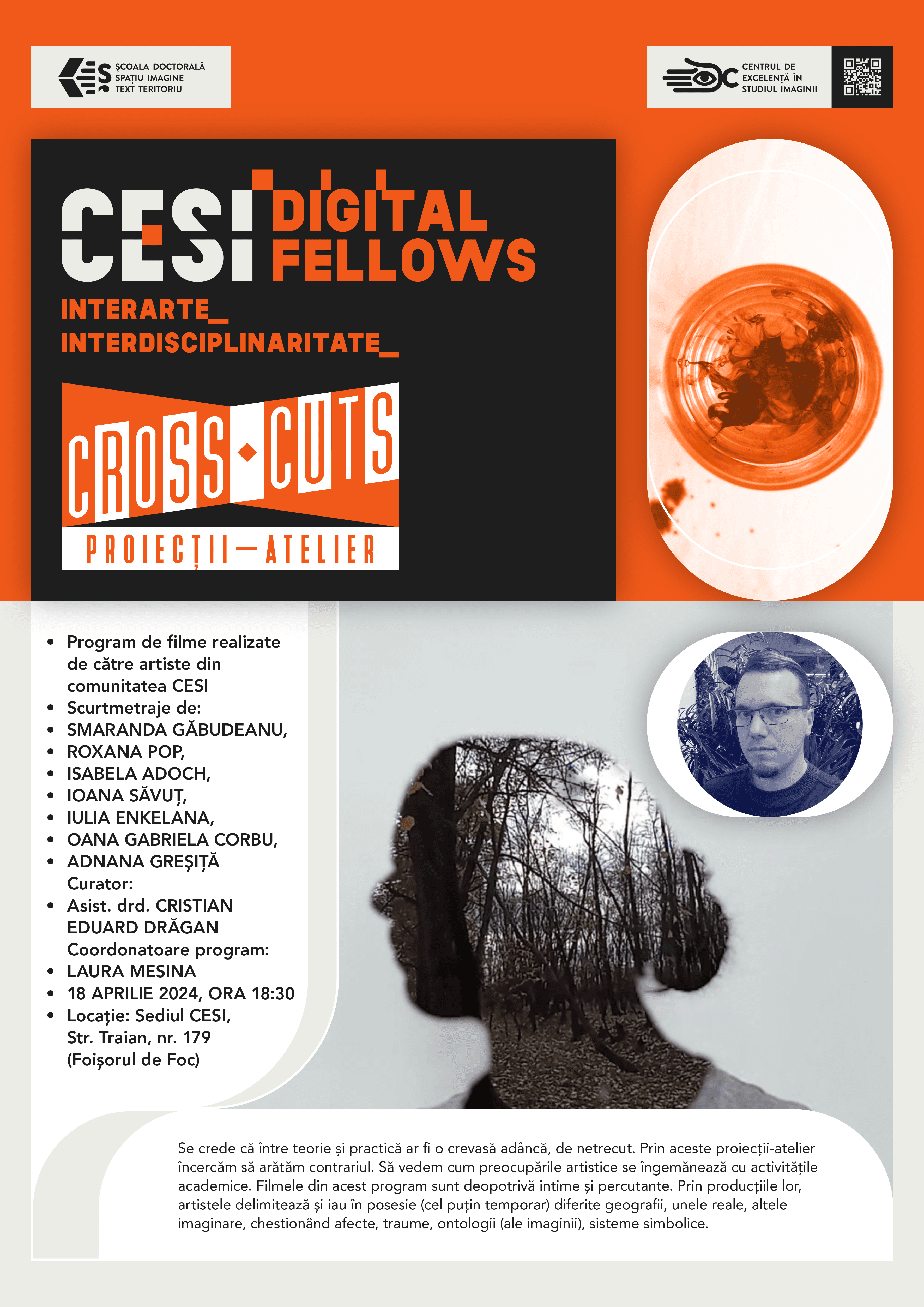
April 18, 2024
CROSS-CUTS. Screenings and Workshops
A program of films (short films) created by artists from the CESI community: Smaranda Găbudeanu, Roxana Pop, Isabela Adoch, Ioana Săvuț, Iulia Enkelana, Oana Gabriela Corbu, and Adnana Greșiță. It is often said that there is a deep, unbridgeable chasm between theory and practice. Through these workshop screenings, we aim to demonstrate the opposite—to see exactly how artistic concerns intertwine with academic activities. The films in this program are both intimate and powerful. Through their work, the artists map and appropriate (at least temporarily) various types of geographies—some real, others imaginary—seeking to represent affects, traumas, ontologies (of the image), and symbolic systems.
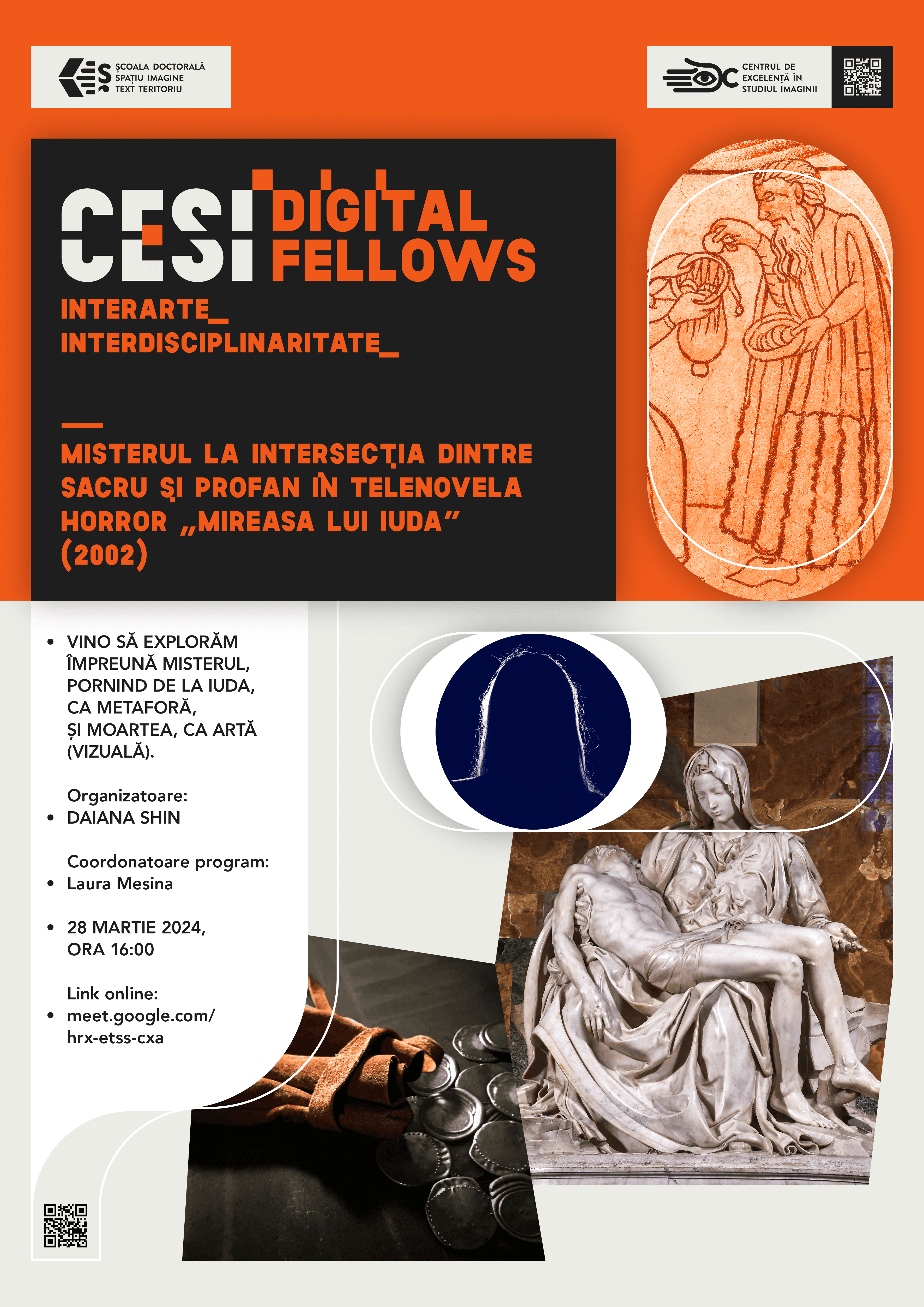
March 28, 2024
Workshop: “The Mystery at the Intersection of the Sacred and the Profane in the Horror Telenovela ‘Judas’ Bride’ (2002)”
Ph.D. candidate Diana Buhuș (Daiana Shin) explores the mystery, using the figure of Judas as a (visual) metaphor and the theme of death as (visual) art. Her research encompasses themes and approaches𝑜𝑢𝑡𝑜𝑓𝑡ℎ𝑒𝑏𝑜𝑥.
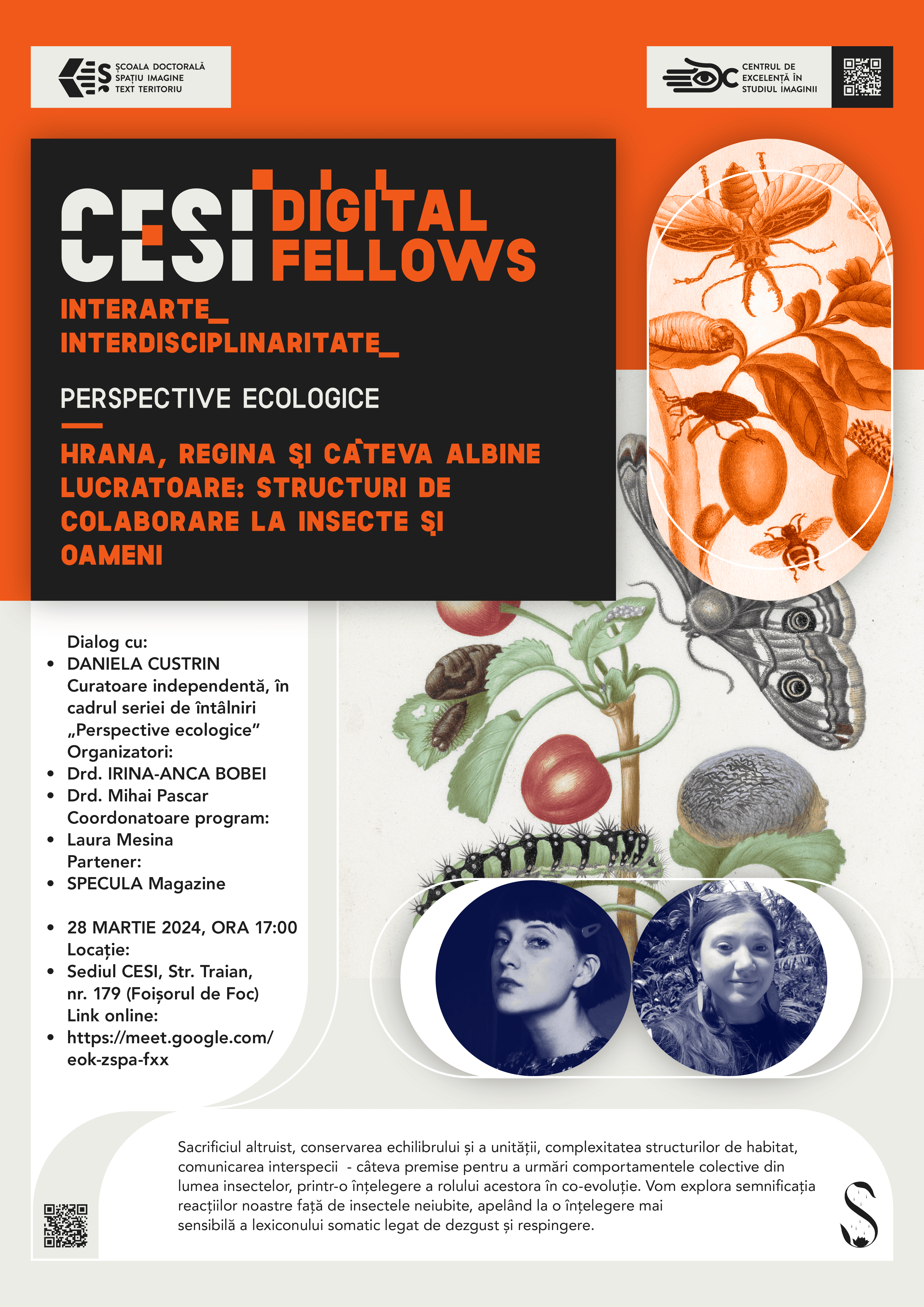
March 28, 2024
“Ecological Perspectives” Series, Workshop: “The Queen and a Few Worker Bees: Structures of Cooperation in Insects and Humans”
Dr. Irina Bobei in conversation with Daniela Custrin, independent curator and CESI alumna. Altruistic sacrifice, the preservation of balance and unity, the complexity of habitat structures, and interspecies communication—these are some of the starting points for examining collective behaviors in the insect world through an understanding of their role in co-evolution. We explore the significance of our reactions to unloved insects, drawing on a more nuanced understanding of the somatic lexicon related to disgust and rejection.
Show all (9)
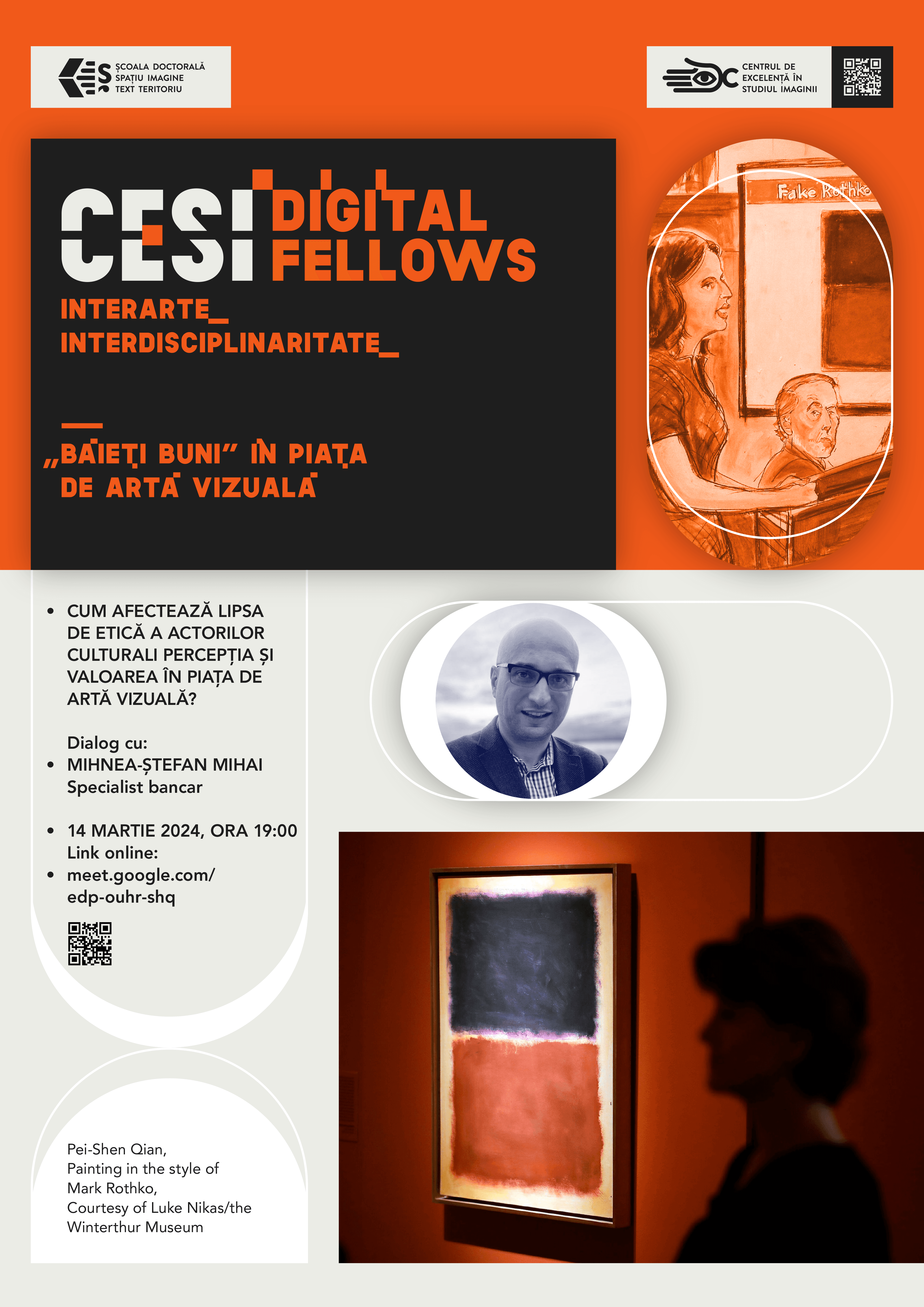
March 14, 2024
The Workshop “Good Boys” in the Visual Arts Market
How does the lack of ethics among cultural actors affect perception and value in the visual arts market?Mihnea Mihai’s dissertation research focuses on the visual arts market and how artists’ public image and market share are shaped—or distorted. His interest in this topic naturally complements his 20 years of professional experience in the banking sector in Central European countries.
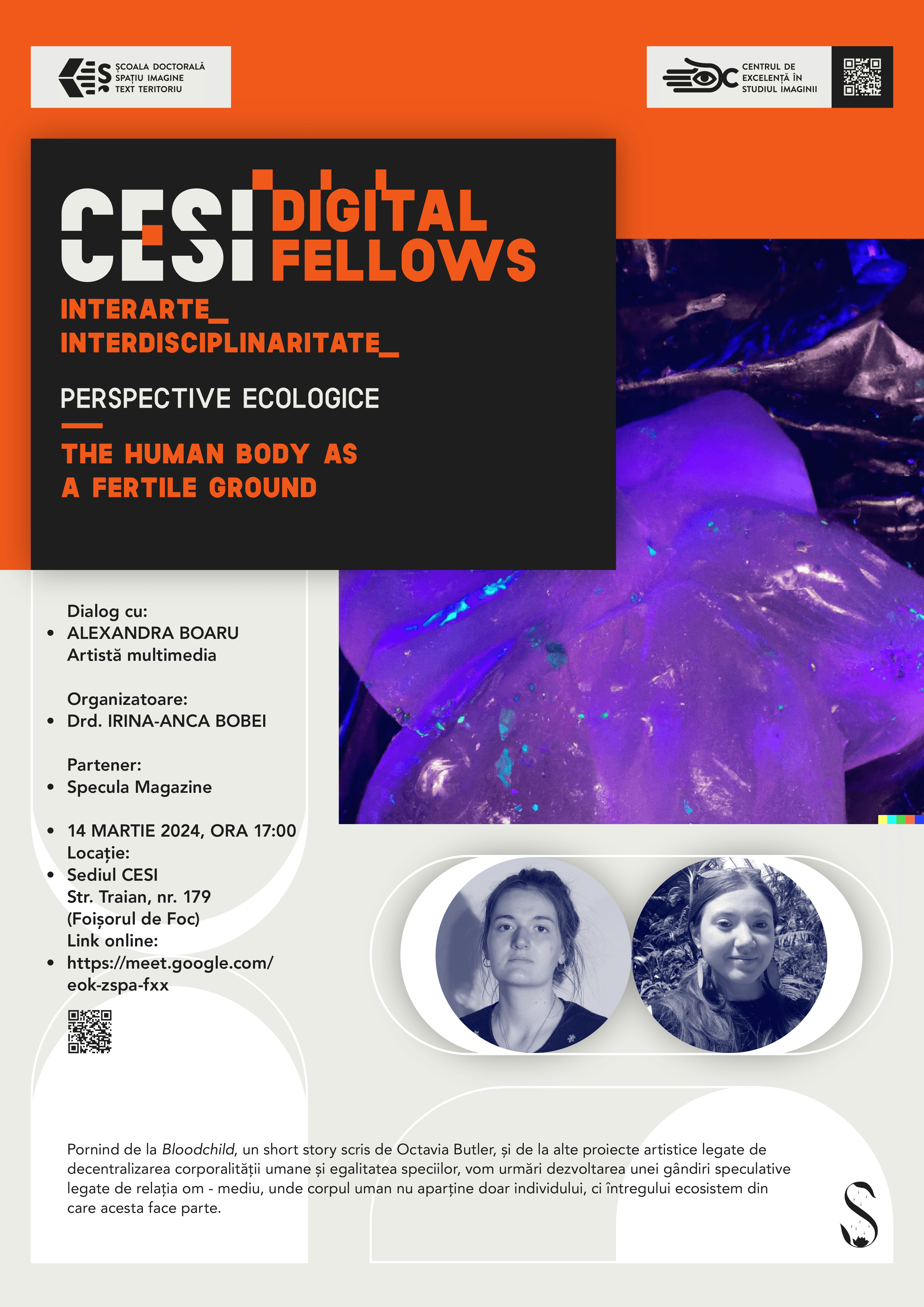
March 14, 2024
"Ecological Perspectives" series, "The Human Body as a Fertile Ground" workshop
Ph.D. candidate Irina Bobei in conversation with Alexandra Boaru, a multimedia artist whose approach can be seen as poetic, influenced by the literary genre of speculative fiction, magical realism, and 1970s conceptualism.
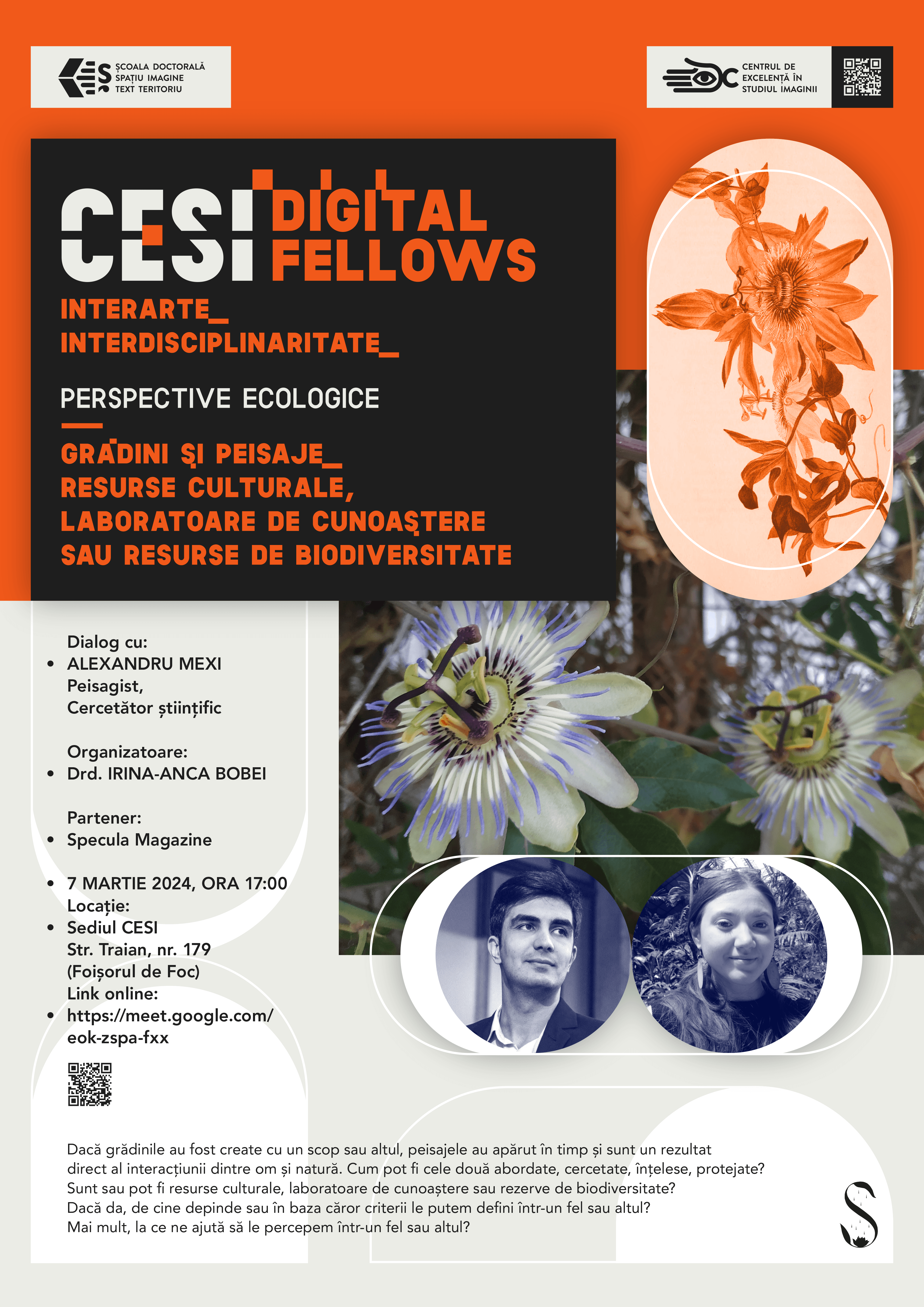
March 7, 2024
“Ecological Perspectives” Series, Workshop: “Gardens and Landscapes—Cultural Resources, Laboratories of Knowledge, or Biodiversity Reserves”
Irina Bobei, Ph.D. candidate, in conversation with Dr. Alexandru Mexi, landscape architect, research scientist at the National Heritage Institute, adjunct professor at the University of Agronomic Sciences and Veterinary Medicine in Bucharest, and inventory expert at the Ministry of Culture.

February 29, 2024
Launch of the 2024 edition of the CESI DIGITAL FELLOWS Doctoral Research Circle. Innovative Pedagogies – CESI Contributions. Immersive Technologies and Museum Education
Discussions featuring high school students and art teachers from Genesis College High School, I.L. Caragiale National High School, Mihai Eminescu National High School, and the International High School of Computer Science in Bucharest. Speakers: Corina Popa, Assistant Professor, SD SITT/CESI; Despina Hașegan, Ph.D. candidate (National Museum of Maps and Old Books); and Iulia Iordan, Ph.D. candidate (Da'DeCe Association) – presentation of international projects focused on interdisciplinary education and the development of critical thinking in education, culture, and the public sphere. Organizer and moderator: Associate Professor Laura Mesina, Ph.D.
Academic Events
About
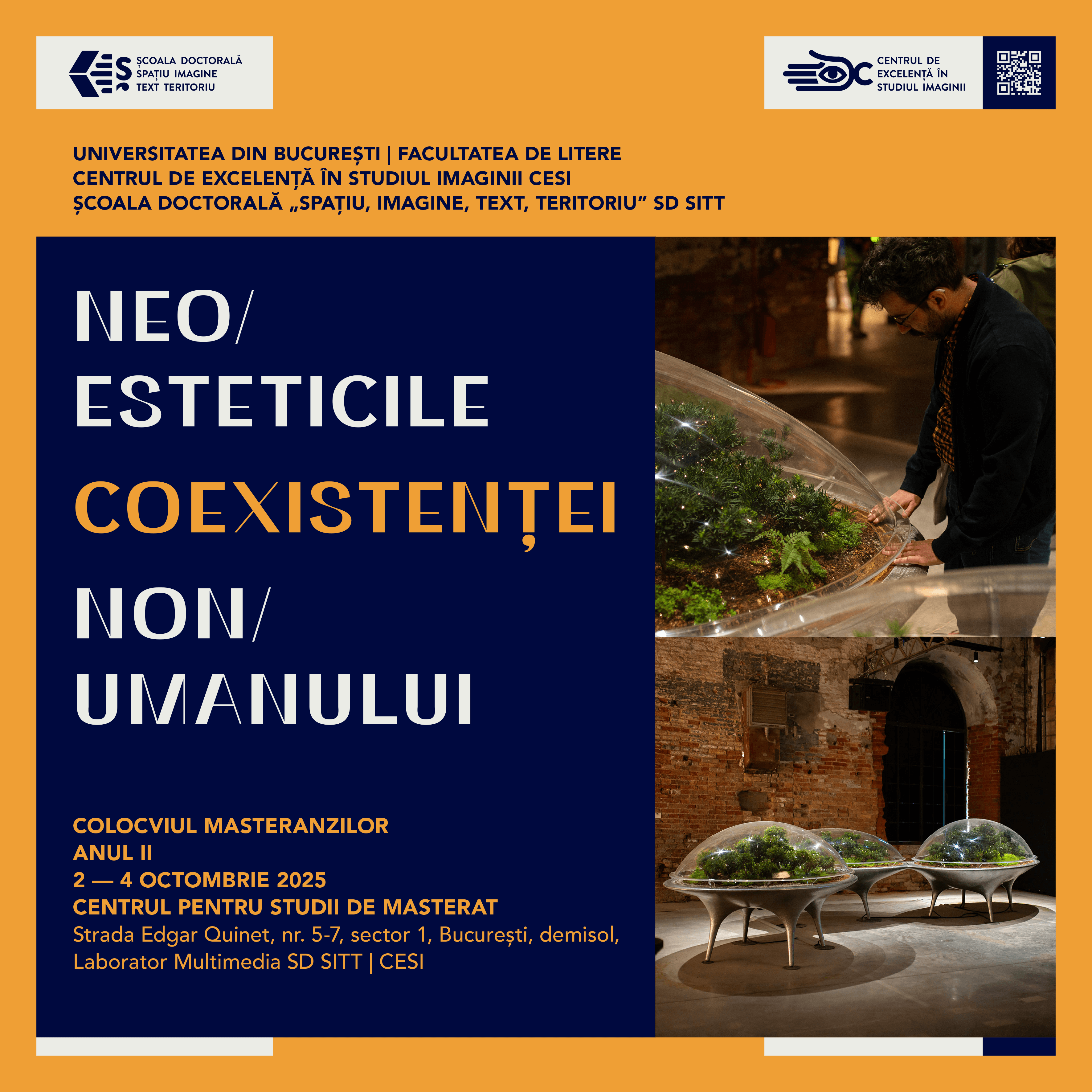
2October 4, 2025
NEO/AESTHETICS OF NON/HUMAN COEXISTENCE - Second-Year Master's Students' Symposium
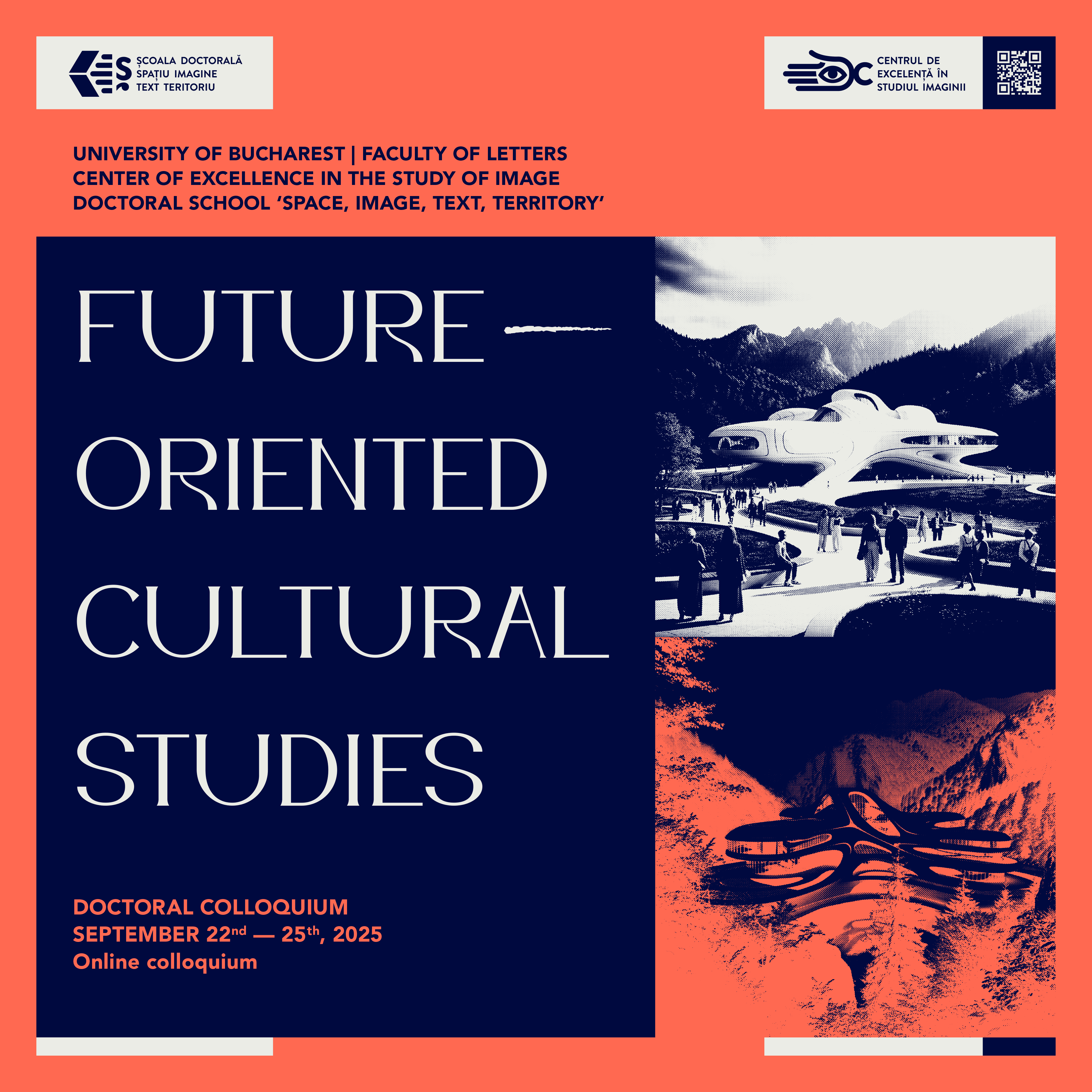
22September 25, 2025
Future-Oriented Cultural Studies
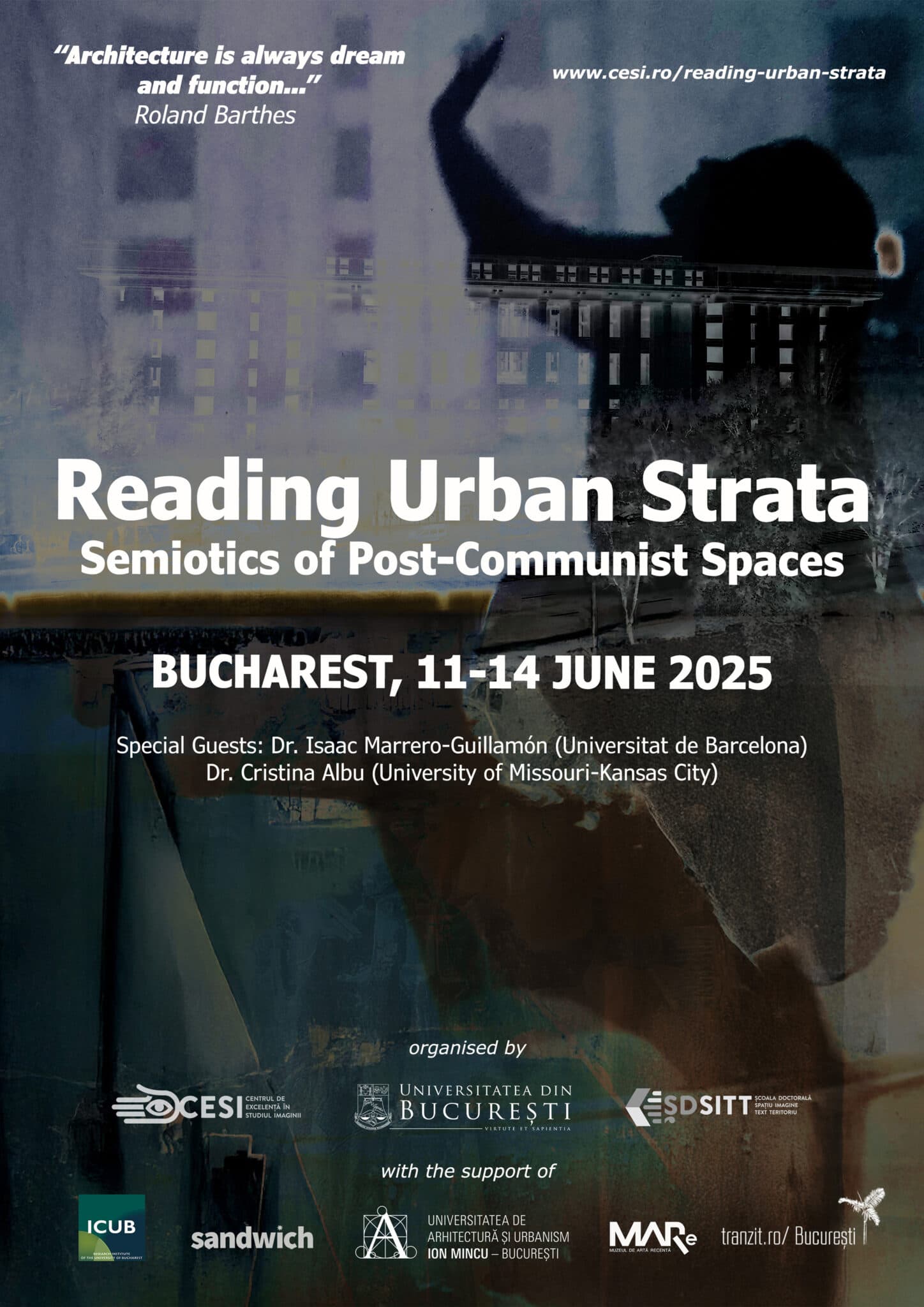
10June 13, 2025
Reading Urban Strata: The Semiotics of Post-Communist Spaces
Scientific and Organizing Committee: PhD candidates Eliza Pătrașcu and Irina Bobei (SD SITT/CESI, University of Bucharest) Dr. Ileana Marin (SD SITT/CESI, University of Bucharest, University of Washington) Dr. Cristina Albu (University of Missouri-Kansas City) Special Guest: Dr. Isaac Marrero-Guillamón (University of Barcelona) Visual Identity: eliza_demian Reading Urban Strata: The Semiotics of Post-Communist Spaces Bucharest | June 11–14, 2025 This event brings together researchers, artists, and practitioners to reflect on how time, architecture, and society intersect in post-communist cities. Focusing on Bucharest’s layered urban fabric, we will explore architecture as a living organism shaped by ideology, memory, and everyday use. How can we interpret the traces of history embedded in the city? And how might alternative forms of research and storytelling reframe these narratives? Join us for one or more of the panel discussions, film screenings, site visits, and performative interventions that offer new ways of interpreting the city and its histories. Registration required! If you would like to attend, please send us an email at patrascu.eliza@gmail.com – Limited spots available!
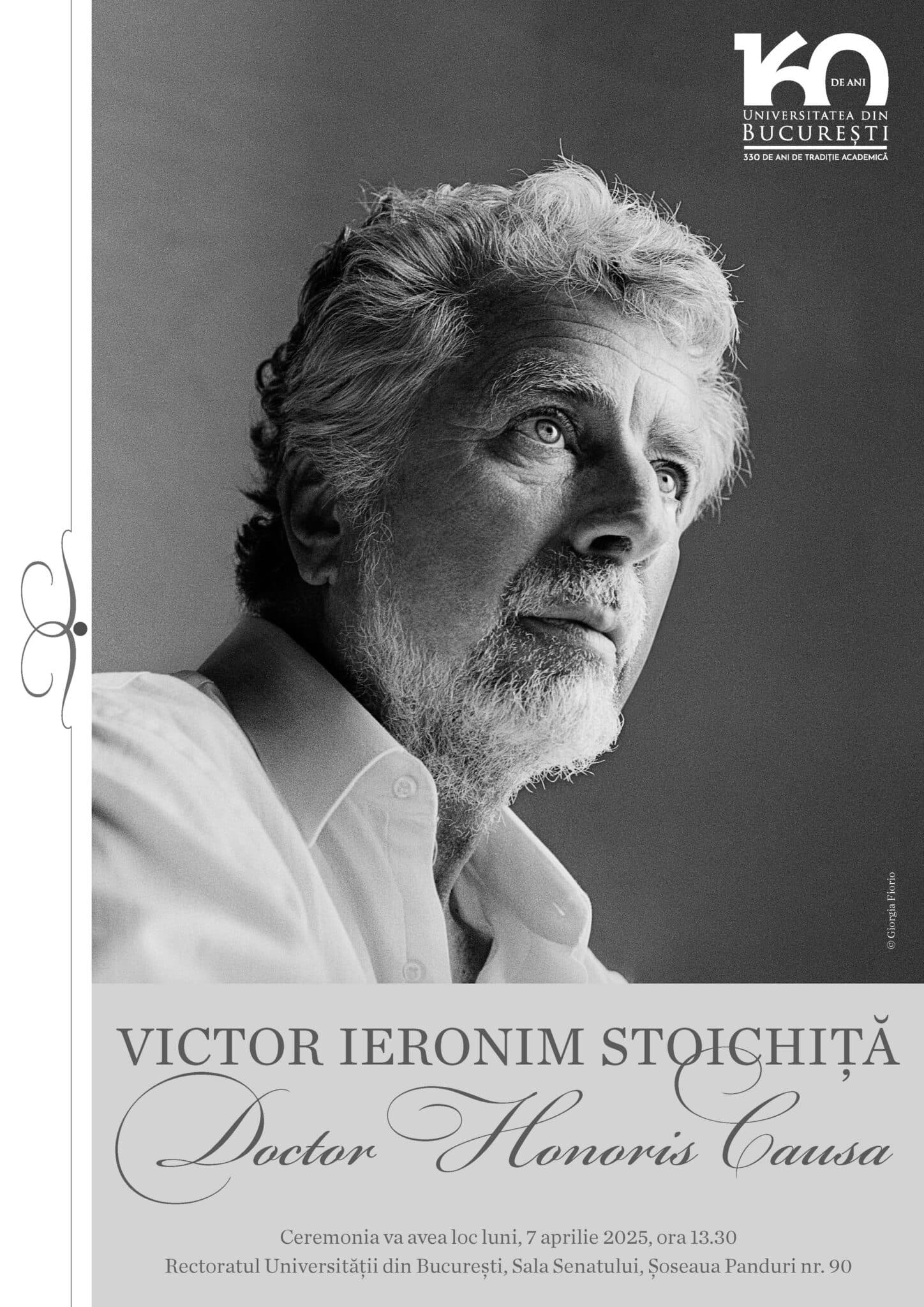
6April 9, 2025
Events dedicated to Prof. Victor Ieronim Stoichiță
April 7, 1:30 p.m., University of Bucharest Rectorate, Senate Hall (90 Panduri Road) The ceremony conferring the title of Doctor Honoris Causa upon Mr. Victor Ieronim Stoichiță, professor emeritus at the University of Fribourg (Switzerland), Romania’s foremost image theorist and art historian. April 8, 5:00 p.m., “Carol I” Central University Library, Auditorium (88 Calea Victoriei) Victor Ieronim Stoichiță – ABOUT DREAMS – Keynote Lecture The lecture is related to his impressive recent work, *La fabrique du rêve. Songe et représentation au seuil de la modernité* (Éditions Hazan, 2024).Long before the Surrealist revolution, the history of art and imagery had already grappled with dreamlike experiences, which it sought to render in a visible form. The phenomenon is significant above all because of the challenges posed by moving beyond the strictly verbal framework involved in the “narration” (oral or textual) of a dream—with all its difficulties and pitfalls—by resorting to a fundamentally visual account. This playback Visual learning involves a number of specific challenges. This conference aims to address them (Victor Ieronim Stoichiță)What is the place of the dream’s illusion in the age of the invention of perspective? What challenges does the representation of altered states of consciousness pose at the moment of the discovery of the cogito? How is the status of the dream sign defined in the realm of painting? The most important artists, from Raphael and Michelangelo to Vermeer, from Giotto and Dürer to Bosch and Schongauer, have grappled with these questions, attempting to offer a series of answers. Others, less well-known, have raised these questions, challenging, through their approach, the ideas of classical oneiromancy as well as the viewer’s interpretive abilities. Through this critical reflection at the intersection of dream interpretation and image analysis, Victor Ieronim Stoichiță addresses a fundamental hermeneutic problem: how to approach the indistinct, the unclear, the imprecise, the obscure, the vague. (trans. from Fr. Humanitas) April 9, 4:00 p.m., Reading Room, Faculty of Letters, University of Bucharest (5–7 Edgar Quinet Street) ABOUT AUTOBIOGRAPHY – Roundtable Discussion Participants: Victor Ieronim Stoichiță, Professor Emeritus at the University of Fribourg Ana Blandiana, writer, corresponding member of the Romanian Academy Sorin Alexandrescu, Professor Emeritus at the University of Amsterdam, founding director of CESI, honorary member of the Romanian Academy Iulian Boldea, professor at the “G.E. Palade” University of Medicine and Pharmacy in Târgu Mureș, editor-in-chief of the journal Vatra. The moderator of the event, Sorin Alexandrescu, will open the discussion with Victor Ieronim Stoichiță’s autobiography, *Farewell to Bucharest: A Story* (translated from French by Mona Antohi, Humanitas, 2024 [2015], pp. 193–194). Published in French in 2014, it was awarded the Prize for the Promotion of the French Language and Literature by the French Academy in 2015. The discussion will also explore the relationship between personal identity, history, text and image, cultural belonging, memoirs, and the diary. Main promoters and organizers: Sorin Alexandrescu and Laura Mesina Institutional partners: The "Carol I" Central University Library, New Europe College, Humanitas, and the IMAGORA-CESI Association.
%2520Online%2520-%2520Colocviu%2520Masteranzii.png&w=3840&q=75)
2October 4, 2024
IN OUR TIME: ARTISTIC VISUALITIES, PEDAGOGIES, ARCHIVES - Second-Year Master's Student Symposium
Show all (9)
%2520Online%2520-%2520Colocviu%2520Doctoranz%252023-26.PNG&w=3840&q=75)
23September 26, 2024
metamodernity - "The cultural in-between, the political aftermath, or the mystical beyond"
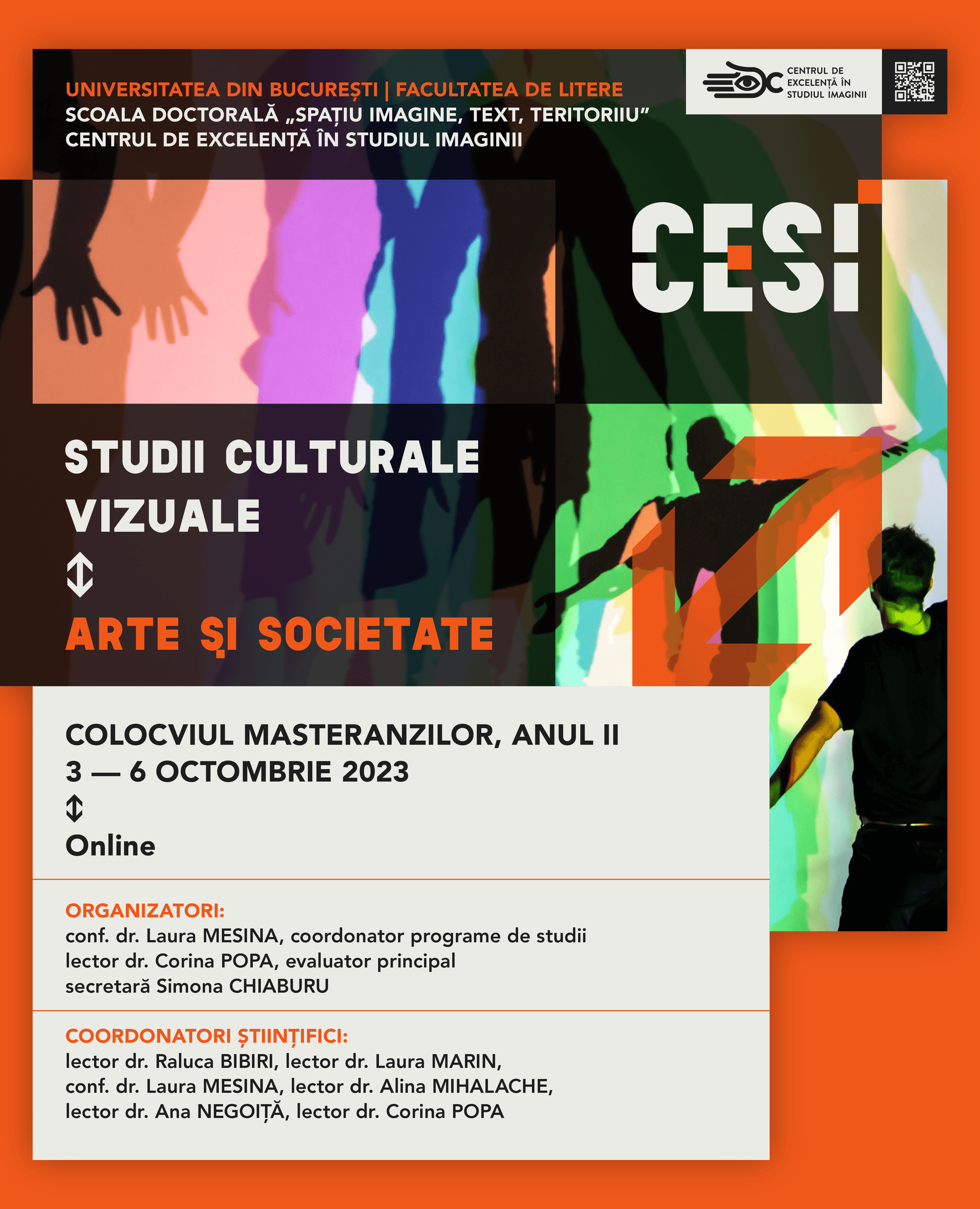
3October 6, 2023
VISUAL CULTURAL STUDIES / ARTS AND SOCIETY - Second-Year Master's Student Symposium
%2520Colocviu%2520FARA%2520LINK.png&w=3840&q=75)
11September 13, 2023
CONTEXT: Images and meanings, cultural objects and policies
10October 14, 2022
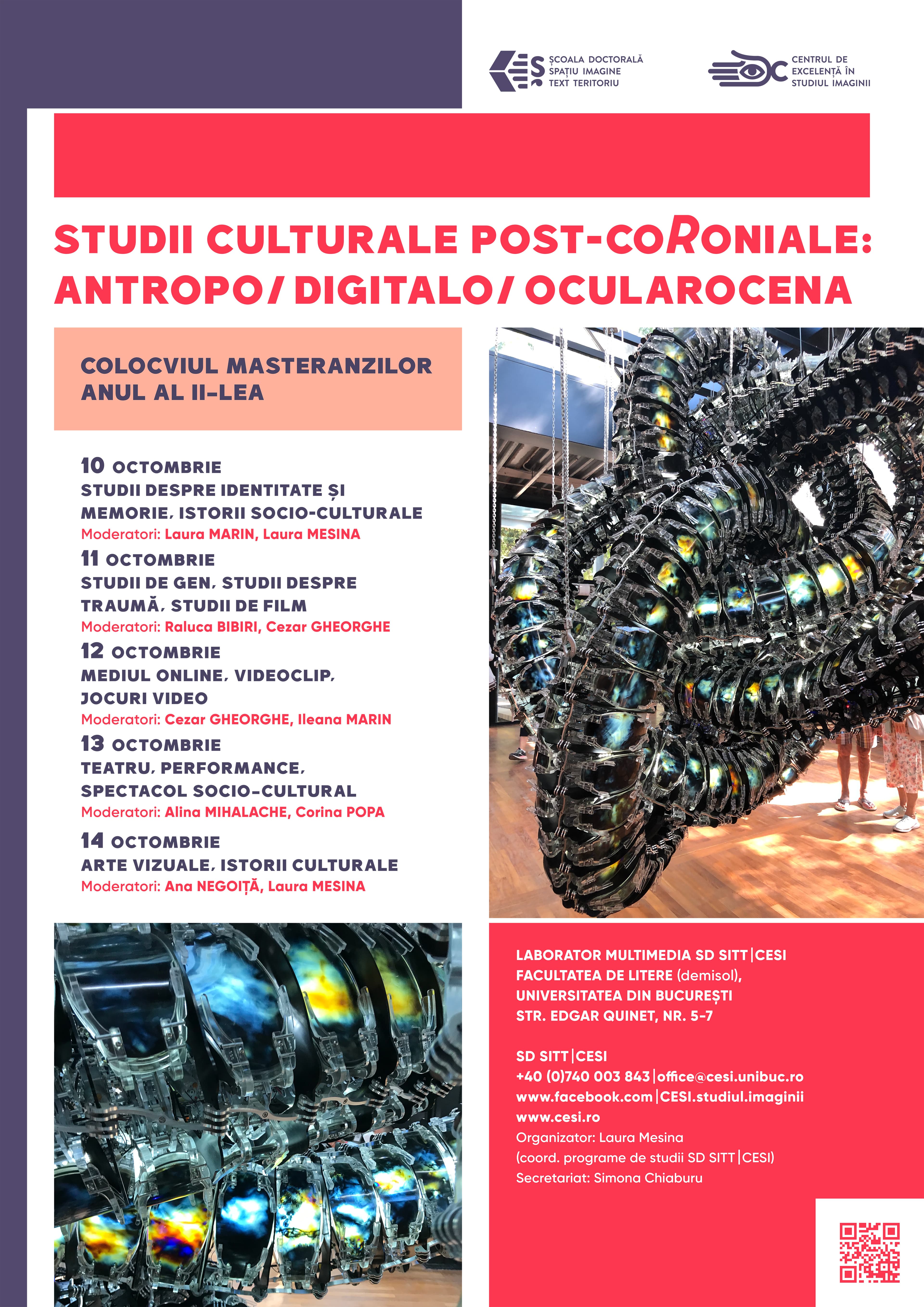
POST-CORONAVIRUS CULTURAL STUDIES: ANTHROPO/ DIGITALO/ OCULAROCENA – Second-Year Master’s Student Symposium
Vezi și